Key Takeaways
-
01
Verifying insurance 48 to 72 hours before every appointment, including for repeat patients, prevents eligibility-related denials and sets accurate financial expectations before the visit.
-
02
Multi-method appointment reminders sent at intervals reduce no-shows more effectively than any single communication method, and a dynamic waitlist keeps cancelled slots filled.
-
03
A clean claim includes the correct CDT code, all required attachments, and complete patient and insurance data; submitting clean claims daily shortens the payment cycle without adding more staff.
-
04
Tracking denial reasons by category, rather than working each denial individually, lets you identify and fix problems instead of running into the same issues over time.
-
05
Auto-ledger posting, digital patient statements with payment links, and upfront co-pay collection are the three billing functions most likely to reduce manual work and improve cash flow simultaneously.
-
06
A small set of metrics (clean claim rate, denial rate, AR over 90 days, and net collection rate) gives you a reliable picture of billing health without requiring complex reporting.
Your front desk spent half of Tuesday on hold with insurance companies. Three weeks of claims sit in the billing queue, untouched. Somewhere in that pile is a $3,500 crown case already 45 days old, held up by a single blank field on the claim form.
Billing delays like this rarely come from a single mistake. They come from a billing process that wasn’t built to prevent mistakes in the first place. When scheduling and billing run on separate systems, managed by teams that rarely coordinate, the gaps between them are exactly where revenue quietly disappears.
This guide walks through a practical billing workflow, from what needs to happen before a patient walks in the door to how you measure whether any of it is working.
How Scheduling and Billing Are More Connected Than They Look
Most dental offices treat scheduling and billing as two separate functions with two separate jobs. In practice, they form one continuous process. Every gap in scheduling, whether from a last-minute cancellation, a no-show, or a double-booked hygiene column, creates a billing problem down the line.
Billing problems create scheduling pressure in return. When cash flow tightens because claims are stalled, practices feel the urge to overschedule to compensate. The added pressure stresses the team, hurts the patient experience, and leaves the underlying cash flow problem unresolved. Billing improvements, then, are most effective when they start at the schedule.
6 Tips to Streamline Back‑Office Billing
Alongside issues with scheduling, many dental offices struggle with billing inefficiencies that drag down revenue. Fortunately, dental billing software can allow you to automate much of the process while reducing costly mistakes.
Let’s review the following three features to look for:
Step 1: Verify Insurance Before the Appointment
How does dental insurance verification work?
Eligibility verification confirms a patient’s coverage, deductibles, and benefits before the date of service, typically 48 to 72 hours in advance. It should run before every appointment, including for established patients.
This verification window prevents a significant amount of work in the future. When your team confirms insurance coverage in advance, they can communicate the patient’s estimated out-of-pocket cost ahead of time, collect co-pays at check-in, and catch eligibility problems before they turn into denied claims.
Discovering a lapse in coverage after treatment means calling the patient, voiding the claim, and rescheduling an insurance conversation that should have taken place before the appointment. Real-time eligibility verification built into your practice management software removes those calls. Dental practice management software can assist with this; for example, Oryx integrates with Vyne Dental to pull eligibility automatically, so your team confirms coverage in seconds.
For a deeper look at how software handles verification and claim attachments, our guide to dental insurance verification covers the mechanics in more detail.
Step 2: Reduce No-Shows Before They Happen
A confirmed schedule is worth more than a full schedule. No-shows create production gaps that are impossible to recover once the day has begun.
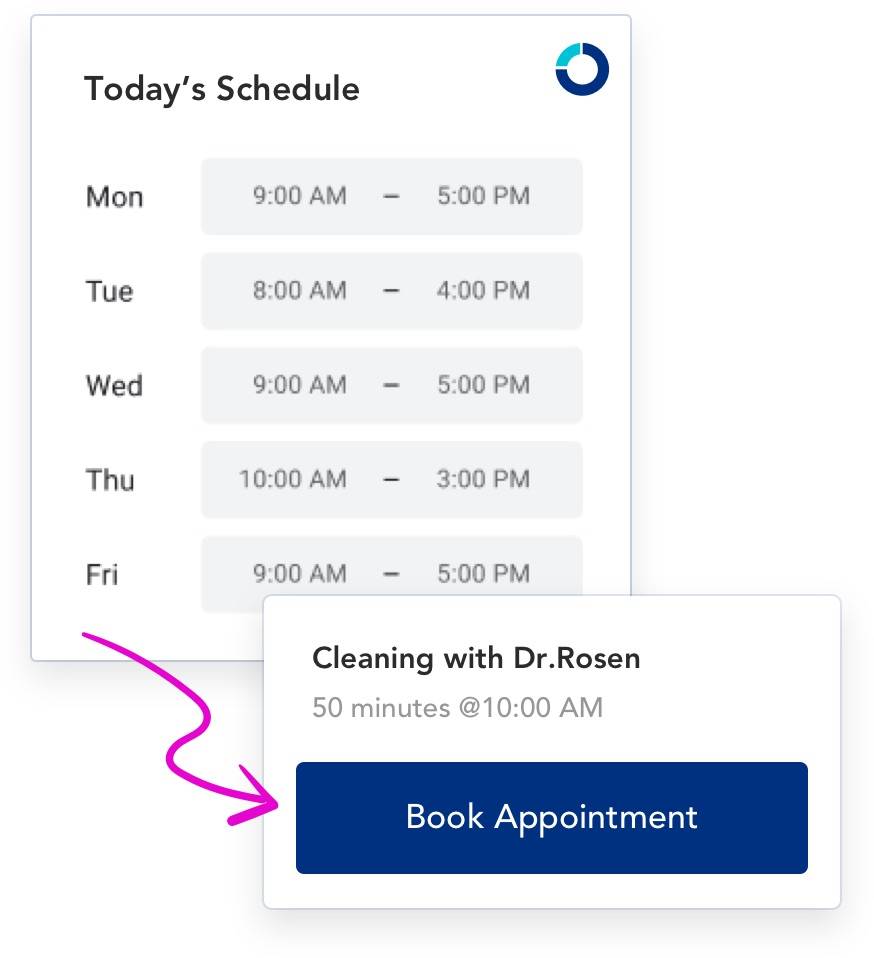
Multi-channel appointment reminders sent at the right times are the most effective way to keep those gaps from forming. A reminder one week out gives patients time to reschedule if something has come up. Two days before the appointment, another message prompts anyone who forgot. Come the morning of the visit, a final reminder catches whoever lost track.
Text messages consistently earn higher response rates than emails or calls, and any combination of the three messaging channels will outperform any single channel alone. When a cancellation does come through, a dynamic waitlist lets your team fill the slot from a list of patients who want to come in sooner.
The schedule stays productive; the patient gets an earlier visit. Oryx’s Patient Communication Center handles multi-channel reminders and waitlist management together, so your team coordinates this from one place.
For guide on how to set up at successful multi-channel appointment reminder system for patients, read our guide here.
Step 3: Submit Clean Claims Every Day
What is a clean claim in dental billing?
A clean claim contains correct patient information, the right CDT code, and all required attachments, with no missing or conflicting data that would cause automatic rejection.
Most dental billing problems start as claim problems, and most claim problems are preventable before submission. Before any claim leaves your office, review it for correct coding, complete documentation, and required supporting files. A claim for a procedure that routinely requires radiographs won’t clear an automated scrub without them.
Treating each claim as a complete package before it goes out, rather than after it bounces back, is the single best habit most practices can build into their billing workflow.
Once claims are ready, submit them the same day or the next business day. Weekly batch billing delays reimbursement by days that daily submission eliminates. Regular daily batches also give your biller a natural rhythm for catching errors while they’re still easy to fix.
Step 4: Build a Denial Management System
What causes dental insurance claim denials?
The most common causes of claim denials are unverified coverage, missing documentation, incorrect CDT codes, filing deadline violations, and frequency limitation conflicts with the patient’s plan.
Most billing teams work denials individually, treating each rejected claim as a separate problem to solve. The more effective habit is tracking the reason behind every denial and looking for recurring patterns. Those patterns reveal where the process needs to change.
If 30% of your denials in a given month come back for missing radiographs on a specific procedure type, the root problem is in your submission workflow. Fixing it once at that level stops those denials from recurring.
A denial log, whether in a spreadsheet or built into your practice management software, lets you categorize denials by reason and identify which payers are generating the most friction. Review it monthly. Recurring categories are the clearest indicator of what to fix upstream.
For specific strategies on reducing claim denials, this Oryx guide to dental RCM covers the approach in more detail.
Step 5: Post Payments and Reconcile Promptly
Insurance payments arrive as EOBs (Explanations of Benefits) or ERAs (Electronic Remittance Advice). When payments arrive, post them to the correct patient accounts the same day, and flag any discrepancy between the expected and actual amount immediately rather than letting it accumulate.
Unapplied payments and unreconciled balances are a quiet but consistent source of AR confusion. When posting lags, accounts receivable reports stop reflecting reality. Your team ends up chasing balances that have already been paid.
Auto-ledger posting, a feature built into Oryx, applies insurance payments automatically when they’re received, eliminating the lag between payment arrival and ledger update. Accounts stay current without manual data entry for every ERA.
Step 6: Make It Easy for Patients to Pay
Insurance covers the claim, but patients cover the rest of the cost. If collecting the patient portion requires your team to call, wait, follow up, and call again, you’re adding unnecessary time and effort to the collection cycle.
Digital statements with an embedded pay-now link reduce friction to a single step. Patients receive a text or email, tap the link, and pay on their own schedule. Many settle their balance the same day the statement arrives. The result is a faster collection cycle and far less follow-up for your staff.
Collecting the estimated co-pay at the time of service matters just as much. Upfront collection removes the accounts receivable step for the patient portion and sets clear financial expectations before treatment begins. Patients who understand what they owe and have a simple way to pay are far more likely to settle promptly.

How to Bridge Scheduling & Billing for True Efficiency
Scheduling and billing shouldn’t operate in silos. Connecting these two systems via a comprehensive dental software platform reduces errors, improves patient follow-ups, and supports stronger financial outcomes.
Let’s review a few ways bridge scheduling and billing can improve your team’s processes below:
1. Eliminate Duplicate Data Entry
When scheduling and billing systems share a database, data entered once (such as a no-show flag) can automatically trigger billing workflows like cancellation fees or follow-ups.
Fewer clicks, fewer mistakes!
2. Run Combined Reports for a More Comprehensive View
Integrated dental billing and scheduling software doesn’t just streamline tasks—it gives you a clear view of how your operations impact revenue.
By running combined reports, you can uncover hidden patterns, like how no-shows are directly tied to missed collections.
These insights empower you to take targeted action, reduce preventable revenue loss, and optimize both your scheduling and billing systems for maximum efficiency.
3. Use a Unified Cloud-Based Dental Management Software to Scale Seamlessly
Whether you’re overseeing one practice or expanding across multiple locations, cloud-based scheduling and billing tools help keep your operations connected. They eliminate data silos, streamline onboarding for new staff, and allow you to scale without constant system headaches.
With everything from scheduling to reporting working together, your team can focus less on juggling digital tools—and more on growing the practice.
The KPIs That Tell You If It’s Working
All of these steps work best when paired with clear metrics. A few numbers worth tracking on a weekly or monthly basis:
- Clean claim rate: The percentage of claims that clear on the first submission with no errors or missing information. Aim for 95% or above. Anything significantly lower points to a submission workflow problem worth investigating.
- Denial rate: Track denials as a percentage of total claims submitted. Most well-run practices target under 5%. Your denial log should tell you which categories are driving this number up.
- AR over 90 days: The percentage of your total accounts receivable outstanding for more than 90 days. The longer a claim sits, the harder it becomes to collect. Keeping this metric under 15% of total AR is a reasonable target for most practices.
- Days from date of service to claim submission: Your internal measure of submission speed. Daily billing keeps this at one to two days for most claims.
- Net collection rate: The percentage of collectible production your practice actually collects, after adjustments. This metric is your billing health number in a single figure.
Oryx’s Practice Performance dashboard surfaces all of these in one view, updated in real time, so your team always has a current read on billing health.
Make Every Minute Count With Oryx
Every task your team can automate frees up time for patient care. Oryx’s full-service platform—from self-scheduling to billing automation—helps turn overhead into growth. With features like digital reminders, cloud-based ledgers, and centralized reporting, your practice can work smarter, not harder. Learn more about our all-in-one cloud-based dental software today!
Want to see how our software makes it so your practice almost runs itself? Schedule a custom live demo.