What “Productive” Really Means in a Dental Office
A full schedule doesn’t automatically mean you’re productive. If your team is constantly behind, staying late to finish notes, or chasing claims and unpaid treatment, you’re just busy.
In a productive practice, the same effort produces better outcomes:
- Fewer no-shows and late cancellations
- Fewer bottlenecks at check-in, handoffs, and checkout
- Fewer errors in notes, claims, and billing
You don’t need a dashboard full of vanity metrics, but you do need a few core indicators, such as:
- Production per day / per provider
- Case acceptance rate
- Hygiene reappointment rate
- No-show / late-cancel rate
If you can’t see those numbers easily, productivity improvements will always be guesswork. That’s one of the biggest practical wins of using an all-in-one platform like Oryx: clinical data, imaging, scheduling, billing, and analytics live in the same ecosystem, so you’re not stitching reports together from multiple systems.
1. Find and Fix Your Biggest Bottlenecks
Before you change anything, you need to understand where you’re losing time, money, or patients.
Start with mapping the entire patient journey. Literally sketch the path from first contact to recare:
- First call or online booking
- Digital forms and intake
- Check-in and waiting
- Hygiene and comprehensive exam
- Diagnosis and treatment planning
- Financial discussion and scheduling
- Treatment delivery
- Follow-up and recall
For each step, ask:
- Where do we see delays or confusion?
- Where does information get lost?
- Where do patients say “I’ll think about it” and disappear?
- Where does the team feel the most stress?
Common bottlenecks:
- Providers waiting on incomplete or scattered patient information
- Team members chasing paper forms or missing documents
- Providers doing notes after work hours because documentation is too manual
- Treatment plans diagnosed but never followed up
- Claims delayed or denied due to incomplete documentation
How Oryx helps
Oryx is built around that entire lifecycle; not just scheduling or billing in isolation. Clinical findings, AI imaging, treatment plans, notes, and financials all live together in one platform, so every handoff (from the front desk to hygiene, then to the dentist, then to billing) is cleaner and faster.
2. Standardize Clinical Exams and Treatment Planning
Most productivity advice focuses on reminders and billing. That matters, but your biggest leverage is clinical consistency. Unstandardized exams create chaos:
- Each provider does something slightly different
- Diagnoses and plans are inconsistent
- Appointments run long because decisions are made on the fly
- Patients don’t fully understand why treatment is needed
When every provider runs their own playbook, without standardization you get inconsistent:
- Time per visit
- Depth of exams
- Treatment recommendations
- Documentation quality
The solution is to build in standardized, evidence-based protocols. By doing this, you will:
- Make exam times more predictable
- Reduce decision fatigue
- Support more consistent case acceptance
- Make training new associates far easier
How Oryx helps
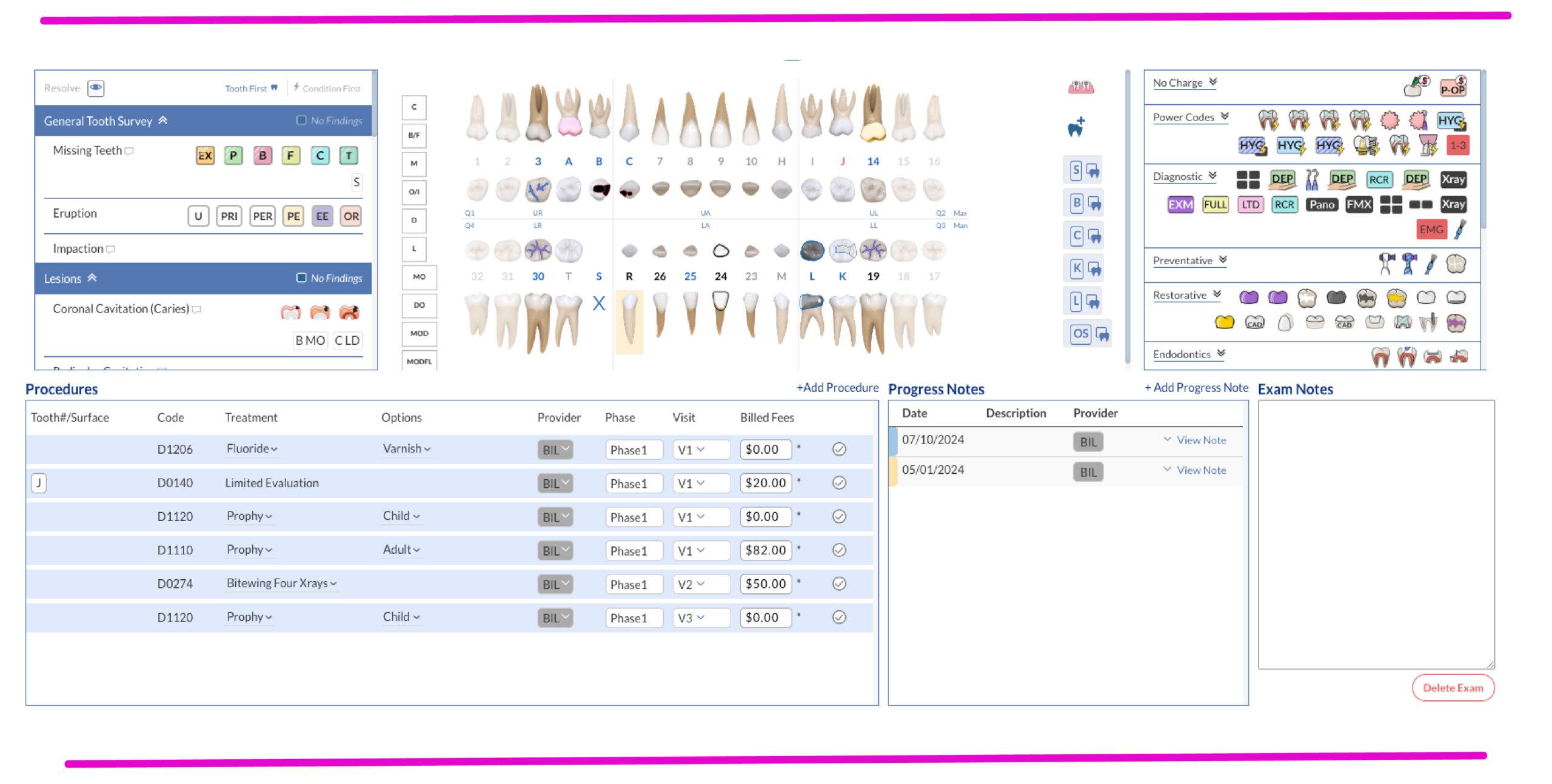
Oryx was developed by dentists and is grounded in evidence-based protocols. Built into the platform is an experienced balance of both structure and flexibility. You can use clinically intelligent, guided exams that standardize how risk and findings are recorded built around tried-and-true processes or pick and choose what’s best for your office.
For example, you can configure templates by provider to preserve their “style” while keeping a consistent core structure. For any time providers may stray off standard elements, prompts can be triggered to remind providers to complete key assessments so nothing important is skipped.
3. Cut Down on Manual Work with Smart Automation
There’s a hard ceiling on productivity if your team spends half the day typing, clicking, and chasing paper. The goal isn’t to add more software. It’s to remove as much low-value, manual work as possible so providers and staff can focus on patients.
Make charting faster and more consistent
Instead of writing every note from scratch, build strong defaults:
- Use procedure-based templates for common visits (fillings, crowns, SRP, extractions, implants, etc.).
- Rely on smart pick-lists and standardized phrases for the routine details.
- Let structured exam data drive the note, instead of re-entering the same information multiple times.
How Oryx helps
In Oryx, exam findings flow directly into progress notes, and automated narrative generation turns that data into complete, payer-ready documentation. Voice-driven perio charting further cuts down on clicks. The net effect is simple: notes get finished the same day with less mental load on the provider.
Use AI imaging to speed diagnosis and case acceptance
AI imaging, used properly, is a way to move through diagnostics and patient education faster:
- It highlights areas that may need closer attention, so you can have a second set of eyes.
- It supports more consistent detection thresholds across providers.
- It gives you clear visuals to show patients what you’re seeing, which shortens explanations and builds trust.
Because AI imaging in Oryx is built into the clinical workflow (not bolted on), images, annotations, and findings live in the same system as your notes and treatment plans. There’s no time lost hopping between applications.
Automate recalls, reminders, and routine follow-ups
Your front desk shouldn’t spend hours every week manually calling overdue patients. Automate:
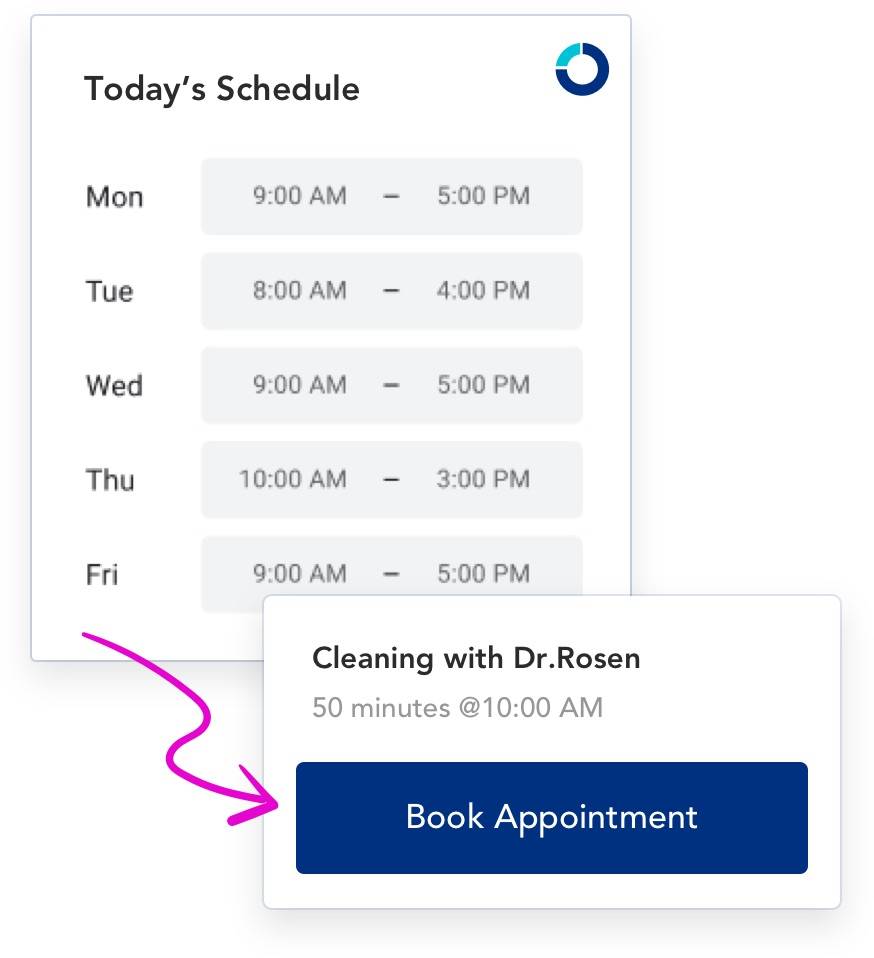
- Hygiene recalls by text and email
- Appointment confirmations and reschedule prompts
- Follow-ups for unscheduled treatment or pending consults
Your team should only handle the exceptions—complex cases, financial questions, anxious patients—not every single reminder.
Oryx ties patient communication directly to the live schedule and patient record. Overdue hygiene, unscheduled treatment, and follow-up lists are surfaced in dashboards, and automated workflows keep outreach going in the background while everything stays documented in one place.
4. Align Your Team With Clear Roles, Huddles, and Checklists
Tools don’t fix everything. The team needs a structure that supports productivity.
Run a focused daily huddle
Focus on specifics, and keep the morning huddle to 10–15 minutes:
- Today’s schedule: where are the risks and opportunities?
- Patients with unscheduled treatment who are in today
- Any special situations (anxious patients, tricky medical histories, financial sensitivities)
- Open time in the next few days that needs filling
- Quick recognition of wins from the previous day
Use Oryx dashboards and the live schedule on screen so everyone is literally looking at the same data.
Make ownership obvious for critical workflows
Assign clear owners for:
- Hygiene recalls
- Unscheduled treatment follow-up
- Claims that are unsent, rejected, or stalled
- Inventory and ordering
- Monitoring incomplete or unsigned charts
Give each owner:
- A simple, written process
- A checklist or task list
- A way to see progress (reports or lists in Oryx)
5. Use Data and Dashboards to Keep Improving
Productivity isn’t a one-time project. It’s an ongoing process that needs to be tracked.
Track a small set of core KPIs
Again, don’t overdo it. Focus on:
- Production per day / per provider
- Case acceptance rate
- Hygiene reappointment rate
- No-show / late-cancel rate
Review monthly and change one thing at a time
Once a month:
- Look at the numbers.
- Pick one problem area (e.g., case acceptance, hygiene gaps, chart completion).
- Make one targeted change (new script, updated template, adjusted block, better follow-up list).
- Re-check the same metric the next month.
Oryx makes this easier because clinical and financial data are in one place. You can actually see how changes in diagnosis, scheduling, or documentation show up in production, A/R, and patient flow.
Bringing It All Together
Productivity in a dental office isn’t about hustling harder or stuffing more patients into the schedule. It comes from clean systems: clear metrics, standardized clinical workflows, less manual work, and a team that knows exactly what they own each day.
When you:
- Track a few meaningful KPIs instead of chasing vanity numbers
- Remove bottlenecks along the patient journey
- Standardize exams and treatment planning so every provider follows the same playbook
- Automate charting, imaging, recalls, and routine follow-ups
- Align your team with focused huddles, clear roles, and simple checklists
…you start running a practice that’s predictably productive.
Doing all of that while juggling disconnected software is possible, but painful. Oryx was built to pull these pieces into one clinically intelligent platform: exams, AI imaging, notes, treatment plans, communication, billing, and analytics all live in the same place. That means less time fixing gaps between systems and more time delivering care.
The goal isn’t a “perfect” day where nothing goes wrong. The goal is a practice where your systems absorb the chaos, your team has room to breathe, and the effort you’re already putting in finally shows up in production, profitability, and patient experience.
Ready to Grow?
See how Oryx helps dental practices simplify operations, reduce friction, and turn effort into predictable productivity.
Schedule your demo today →