


If you’ve ever stared at a stack of denied claims at the end of a long clinical day, you already understand why dental revenue cycle management matters. Getting paid for the care you provide sounds like it should be simple. In practice, it involves a chain of administrative steps where any single mistake can delay reimbursement by weeks or trigger an outright denial.
This guide breaks down what dental RCM actually is, what each stage involves, and what separates practices that collect consistently from those that are always chasing payments.
What Is Dental RCM?
Dental revenue cycle management (RCM) is the end-to-end process of managing every financial touchpoint in a dental practice, from the moment a patient schedules an appointment to the moment that final payment clears.
That includes:
- Collecting accurate patient and insurance information at registration
- Verifying benefits and securing pre-authorizations before treatment
- Assigning the correct procedure codes and documenting services
- Submitting clean claims to payers
- Following up on denials and appeals
- Posting insurance payments and reconciling deposits
- Collecting patient balances
Miss a step or do it poorly, and the financial effects compound. A registration error leads to a verification gap. A verification gap leads to a coding mistake. A coding mistake leads to a denied claim. A denied claim leads to a delayed payment or, in many cases, no payment at all.
What Does Dental RCM Include? The Key Stages
1. Patient Registration and Scheduling
This is where the revenue cycle starts and, unfortunately, where many practices introduce the errors that cause problems downstream. Inaccurate insurance IDs, misspelled names, or missing coverage details create claim rejections that could have been prevented at intake.
Digital registration forms that feed directly into your practice management system reduce the transcription errors that come with manual data entry. Online scheduling with built-in insurance capture prompts patients to provide what you need before they ever walk in the door.
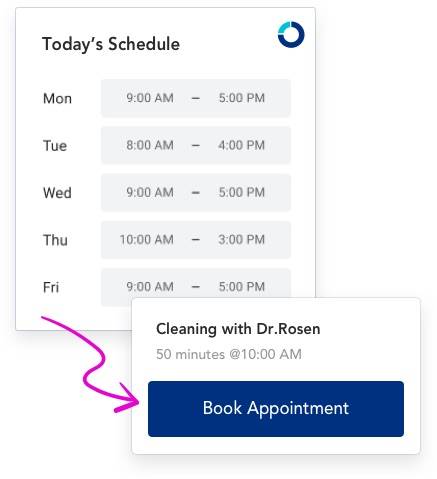
Online scheduling in Oryx lets patients book directly from your availability, capturing the appointment details your front desk needs before they ever pick up the phone.
2. Insurance Verification and Pre-Authorization
Insurance verification is the step that separates predictable revenue from constant surprises. Confirming a patient’s active coverage, benefit limits, deductibles, and whether a procedure requires prior authorization before treatment begins keeps everyone on the same page and dramatically reduces the likelihood of a denial.
For practices still verifying coverage by phone the morning of an appointment, the process is slow, inconsistent, and easy to skip when things get busy. Real-time eligibility checks through your practice management software verify coverage automatically, so your front desk has accurate information without making a single call.
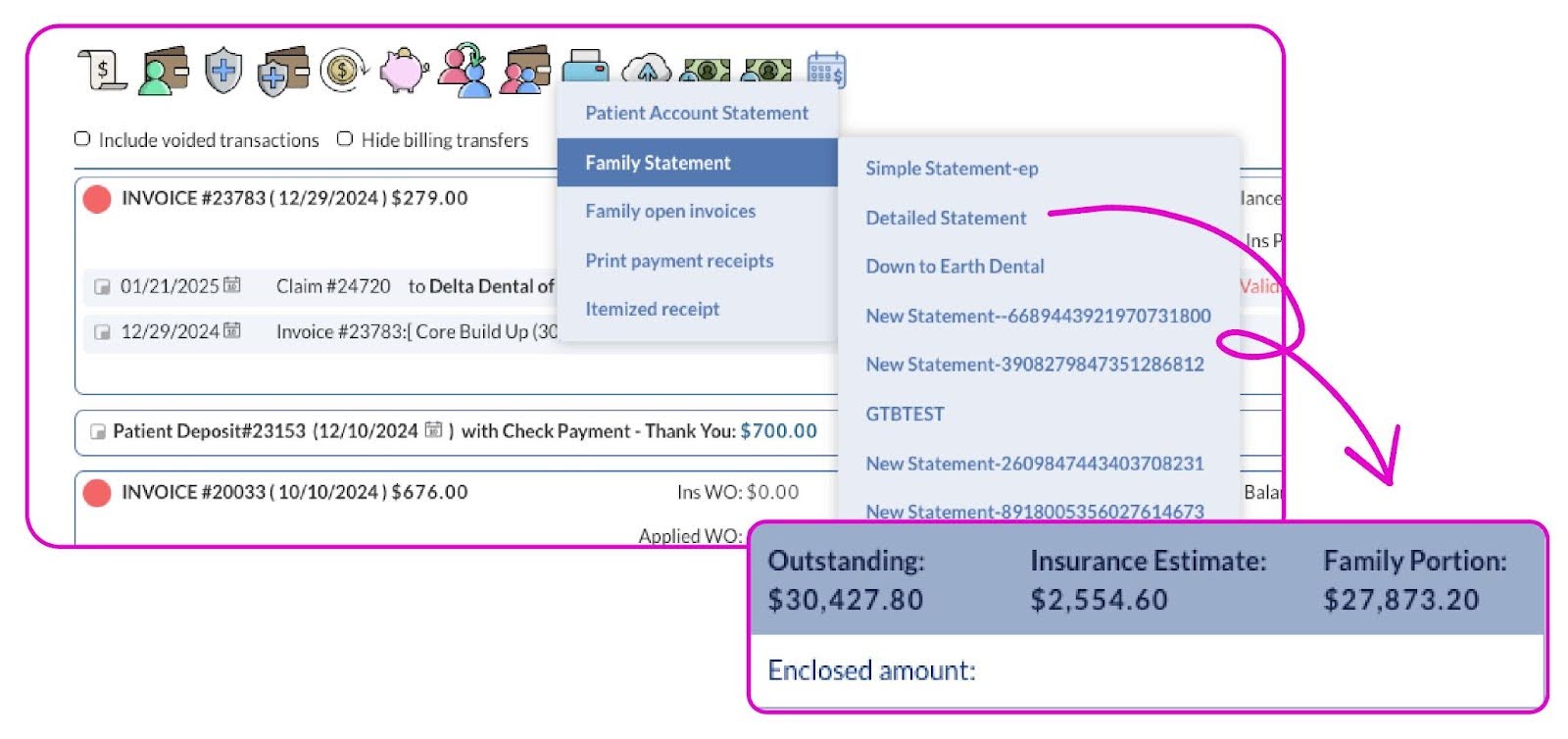
Oryx displays outstanding balances, insurance estimates, and patient portions in one view, so your billing team always knows exactly what’s owed and by whom.
3. Charge Capture and Clinical Documentation
Accurate billing starts with accurate charting. The CDT codes assigned to a procedure need to match the clinical documentation exactly. Payers audit this relationship closely, and discrepancies between what was charted and what was billed are a common cause of denials and audits.
Strong clinical documentation habits protect both your revenue and your compliance posture.
4. Claim Submission
A clean claim is one that goes out with the right codes, the right attachments (X-rays, periodontal charts, narratives), and no data errors. Many practices submit claims daily, but without automated error checks, mistakes slip through and claims come back rejected before they even reach adjudication.
Electronic claims submission with built-in validation catches errors before submission, not after. eClaims also process faster than paper, which matters when you’re trying to shorten the time between treatment and payment.
5. Denial Management and Appeals
Denied claims don’t have to be lost revenue. Many denials are recoverable if you respond quickly with the right documentation. But denial management requires dedicated follow-up, an understanding of why each claim was denied, and consistent appeals processes.
Common dental claim denial reasons include:
- Procedure not covered under the patient’s plan
- Missing or insufficient documentation (no X-ray, no narrative)
- Frequency limitations exceeded
- Incorrect tooth numbering or surface coding
- Coordination of benefits issues for patients with dual coverage
Tracking denial patterns over time reveals systemic issues. If the same code is getting denied repeatedly by the same payer, that’s a signal to investigate whether your documentation or coding approach needs adjustment.
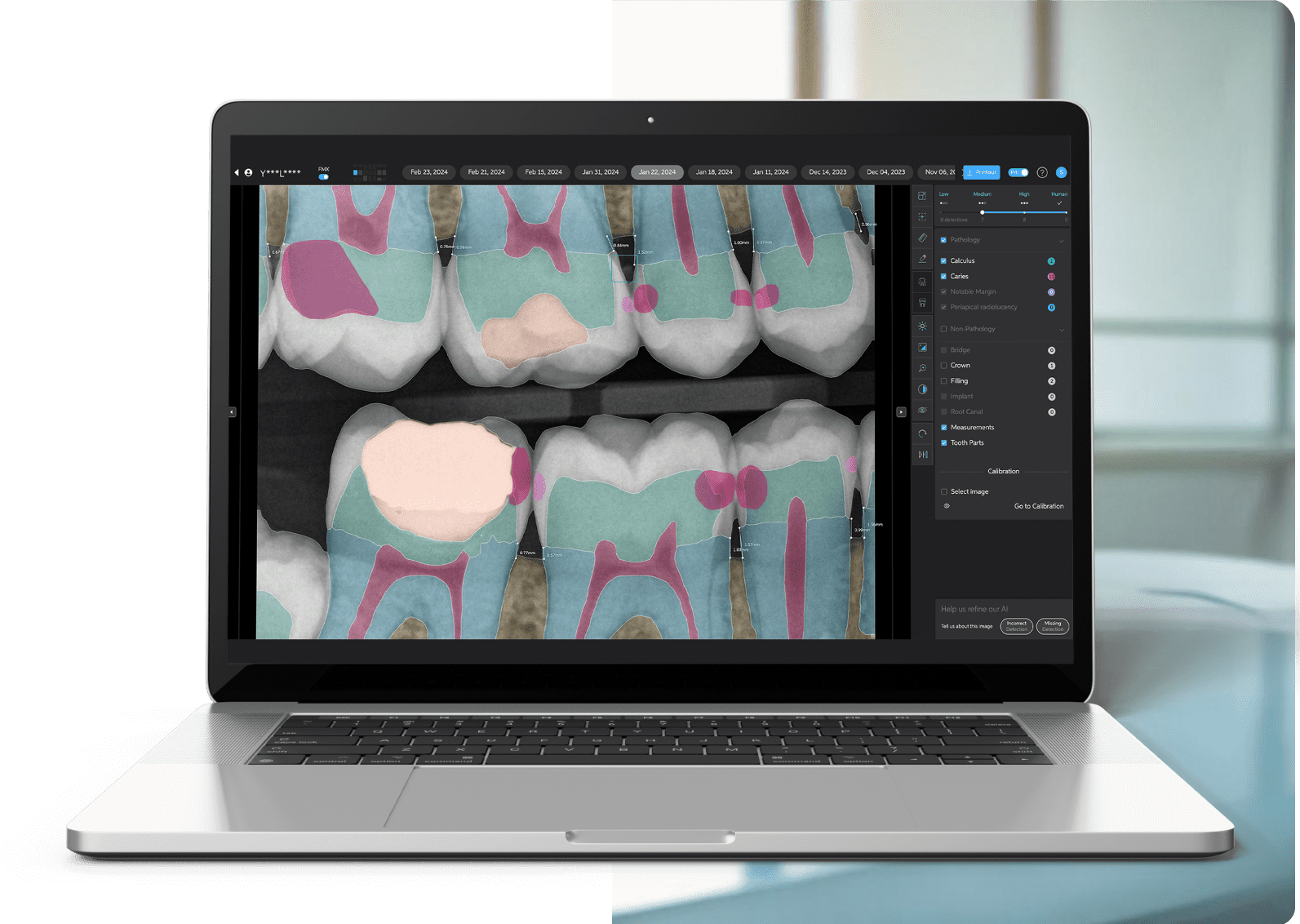
Oryx’s AI-assisted clinical documentation flags conditions directly on radiographs, creating the clear, defensible records that support clean claims and survive payer audits.
6. Payment Posting and Reconciliation
Once an insurance payment arrives, it needs to be posted accurately against the claim, reconciled with the explanation of benefits (EOB), and matched to your bank deposit or EFT. This is more complex than it sounds when you’re handling multiple payers, multiple payment types, and ERA files that don’t always match up cleanly.
Payment posting errors can cause your accounts receivable to look healthier than it actually is, masking underpayments or unapplied credits. Consistent reconciliation keeps your financial picture accurate.
7. Patient Collections and Statements
The final mile of the revenue cycle is collecting the patient’s portion. Whether that’s a copay collected at checkout, a balance statement sent after insurance processes, or a payment plan for a larger treatment, consistent follow-up is what separates practices with clean AR from those carrying months of uncollected balances.
Automated patient statements, digital payment options, and structured follow-up sequences reduce the friction of collections without requiring staff to make uncomfortable phone calls.
How to Reduce DSO in Dental RCM
Days Sales Outstanding (DSO) measures how long it takes your practice to collect revenue after a service is rendered. A high DSO means cash is tied up in unpaid claims and outstanding patient balances. For most dental practices, the goal is to keep DSO under 30 days, though many operate much higher than that without realizing it.
The most effective ways to reduce DSO are:
Submit claims faster
Practices that batch claims at the end of the week are adding days to their DSO before the claim even reaches the payer. Same-day or next-day submission shortens the cycle.
Verify insurance before, not after, treatment
Verification errors caught post-treatment require re-work that delays everything. Real-time eligibility checks eliminate that lag.
Work denials within 48 hours
The longer a denied claim sits, the less likely it is to be recovered. A structured denial workflow with assigned responsibility and clear deadlines prevents denials from aging into write-offs.
Follow up on AR over 30 days
Claims sitting past 30 days need active attention. A prioritized AR follow-up workflow, sorted by payer and dollar amount, ensures your team is working the claims that matter most.
Reduce patient balance aging
Patient AR ages faster than most practices track. Automated statement cycles with online payment options reduce the time between statement delivery and payment receipt.
In-House vs. Outsourced Dental RCM: What’s Right for Your Practice?
Practices generally handle RCM in one of two ways: in-house staff manage the billing process, or they partner with an outsourced RCM service.
In-house RCM gives you direct oversight and keeps billing knowledge inside your team. The challenge is that dental billing is genuinely specialized, payer policies change constantly, and staff turnover can leave your practice exposed when institutional knowledge walks out the door.
Outsourced dental RCM services bring dedicated billing expertise without the overhead of a full-time biller. The tradeoff is that not all RCM partners are equal, and integration with your practice management system matters enormously. A billing partner that works in a separate system from your clinical software creates communication gaps.
A third option, offered by RevGen by Oryx, is a fully managed RCM service that operates inside your existing Oryx practice management platform. Because RevGen’s billing team works directly within your software, there’s no data transfer, no disconnected workflow, and no lag between clinical activity and billing action. Claim submission, insurance payment posting, denial management, and AR follow-up are all handled by specialists with visibility into your actual practice data.
What to Look for in Dental RCM Software
If you’re evaluating dental RCM platforms, the features that matter most in day-to-day operations are:
Real-time insurance verification
Look for verification that runs automatically at scheduling or registration, not a manual process that depends on staff remembering to check.
Automated claims submission with error checking
Claims should go out with built-in validation that catches missing attachments, code mismatches, and data errors before submission.
ERA posting and reconciliation
Electronic remittance advice should post automatically and flag discrepancies for review, rather than requiring manual matching.
Denial tracking and appeals workflow
Your software should make it easy to see all denied claims, why they were denied, and what's been done to address them.
Patient billing automation
Automated statement delivery, online payment portals, and configurable follow-up sequences reduce the manual work of patient collections.
Reporting and KPI tracking
At minimum, you should be able to see your collection rate, claim rejection rate, and AR aging at a glance. Practices that don't track these metrics routinely are flying blind.
Key Dental RCM Metrics to Track
| Metric | What it measures | Target |
|---|---|---|
| Net collection rate Revenue collected vs. collectible |
Revenue collected vs. amount collectible after contractual write-offs | 95% or higher |
| Claim rejection rate Claims denied on first submission |
Percentage of claims denied on first submission | Under 5% |
| Days sales outstanding (DSO) Average days from service to payment |
Average days from date of service to payment received | Under 30 days |
| AR over 90 days Percentage of AR aging past 90 days |
Portion of accounts receivable aging beyond 90 days | Under 15% |
| First-pass acceptance rate Claims accepted without correction |
Claims accepted by payer without correction on first submission | Over 95% |
Frequently Asked Questions
What does RCM stand for in dental?
RCM stands for revenue cycle management. In a dental context, it refers to the complete process of managing a practice’s finances from patient scheduling through final payment collection.
What is the difference between dental RCM and dental billing?
Dental billing is one component of RCM, specifically the process of submitting claims and collecting payment. RCM is broader and includes everything that affects revenue: patient registration, insurance verification, coding, claims, denial management, patient collections, and financial reporting.
What are the most common causes of dental claim denials?
Missing attachments (X-rays, narratives), frequency limitations, incorrect coding, coordination of benefits issues, and lack of pre-authorization are the most frequent reasons dental claims are denied.
Can a small dental practice benefit from RCM services?
Yes. Small practices often have more to gain from structured RCM processes because a single denied claim or a slow collections month has a proportionally larger impact on cash flow. Outsourced RCM services and integrated software tools can give solo and small group practices access to the same billing infrastructure that larger organizations use.
What is a dental RCM service provider?
A dental RCM service provider is a company or team that manages some or all of a practice’s revenue cycle on its behalf. Services range from claims-only billing support to fully managed RCM that covers everything from verification through collections.
Get Your Dental Revenue Cycle in Full Gear
RevGen is Oryx’s fully managed RCM service, built for dental practices that want expert billing support without adding internal billing staff. Because RevGen operates inside the Oryx platform, the billing team has direct access to your scheduling, clinical documentation, and insurance data without any manual data transfer.
RevGen handles the full claims lifecycle: verification, claim submission, ERA posting, denial management, and AR follow-up. Practices get proactive monitoring and consistent follow-up on aging claims, with staff training included so your team understands the process even if they’re not managing it themselves.
For practices that want to manage billing internally, Oryx’s practice management software includes the full suite of RCM tools: real-time eligibility verification, automated eClaims submission, ERA reconciliation, patient billing automation, and AR reporting.
Schedule a demo today or contact us for a personalized consultation!