Growing a dental practice is one of the more operationally complex challenges in healthcare. You’re running a small business, managing clinical staff, navigating insurance contracts, and trying to keep patients coming back — all at once. The practices that scale well aren’t necessarily the ones that move fastest. They’re the ones that build the right infrastructure before they need it.
This guide covers the full range of growth strategies for dental practices, from solo dentists adding their second provider to group practices expanding across multiple locations. We’ll get into what actually moves the needle, which metrics to watch, and how to decide between acquisition versus organic growth.
The Three Ways Dental Practices Grow
Before getting into tactics, it’s worth being precise about what “growth” actually means, because the strategies look very different depending on which path you’re on.
Acquisition means purchasing an existing practice. You inherit the patient base, the staff, the equipment, and often the lease. Acquisition compresses the early-stage revenue ramp significantly — instead of building from zero, you’re starting with an existing production number. The tradeoff is complexity: combining the workplace culture into yours, migrating their existing software, and retaining staff all require active management. Most acquisitions take 12 to 18 months before the acquiring practice sees normalized production.
Organic growth means expanding from within — retaining more patients, increasing case acceptance, attracting new patients through referrals and marketing, and adding providers or services to existing locations. Organic growth is slower but carries less financial risk and typically preserves your practice’s culture better. Practices with strong hygiene departments and high recall rates often find organic growth more predictable than they expect.
Service expansion means adding new sources of revenue to your existing offerings. Common examples include adding orthodontics (in-house Invisalign or traditional braces), implant placement, sleep apnea treatment, or pediatric services. This approach increases revenue per patient and reduces referral leakage — the revenue that walks out the door when you send patients elsewhere for procedures you don’t offer.
Most growing practices use some combination of all three over time. The question is the order: which approach fits your current business structure, cash position, and team capacity?
The Metrics That Actually Tell You Whether You're Growing
One of the most common mistakes in dental practice management is confusing revenue with growth. A practice can be collecting more dollars while actively shrinking its patient base. Here are the numbers worth tracking.
Active patient count is the most honest indicator of practice health. An active patient is typically defined as someone who’s been seen within the last 18 months. If this number is declining, you have a retention problem regardless of what your collections look like.
Patient retention rate tells you what percentage of patients are coming back. Healthy practices retain 85% or more of their active base year over year. Below 75% is worth investigating seriously.
Case acceptance rate measures how often patients say yes to treatment. The industry average sits around 50 to 65%, but high-performing practices push 75% or above. Even a modest improvement — a few percentage points — has an outsized effect on production because you’re not spending anything extra to acquire those patients.
New patients per month matters, but it’s best read in context. A practice adding 40 new patients per month while losing 50 to attrition isn’t growing. Track new patients alongside your retention rate, not in isolation.
Revenue per visit captures how efficiently you’re using chair time. This is where service expansion pays off most clearly: a hygiene visit that uncovers a referral for a procedure you now handle in-house looks very different on a per-visit basis than one you send out.
Hygiene reappointment rate is often overlooked and consistently underestimated. If patients aren’t being rescheduled at the time of their visit, you’re paying to reacquire them every cycle through your recall system. Practices with 90%+ same-day reappointment rates have structurally lower marketing costs than those hovering around 60%.
What Needs to Be in Place Before You Scale
This is the part of the growth conversation that gets skipped most often, and it’s the most important. Every operational weakness in a single-location practice gets bigger at two locations and significantly bigger at five.
Scheduling standardization is foundational. If each provider manages their own schedule with their own logic, you can’t forecast production or spot underperformance patterns. Standardized scheduling templates — blocked time for new patients, hygiene, and high-value procedures — make it possible to actually compare performance across providers and locations.
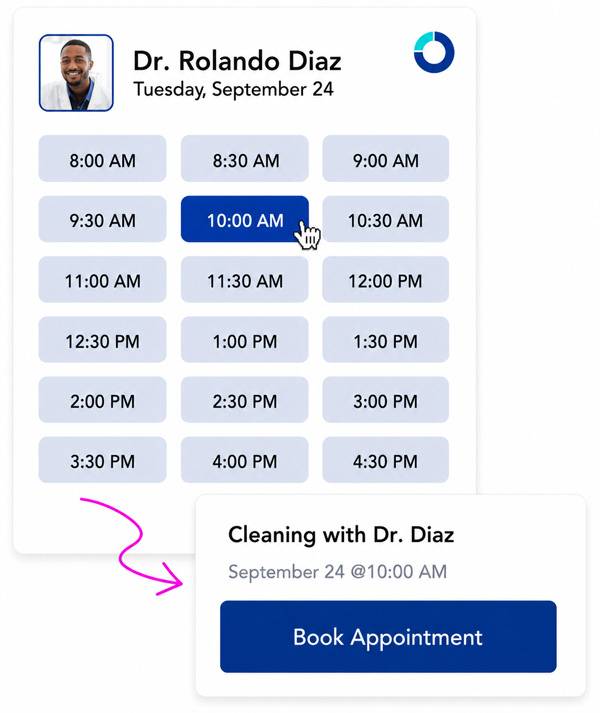
Oryx’s scheduling interface lets group practices set standardized templates across all providers and locations, so production forecasting doesn’t depend on each dentist managing their own calendar logic.
Billing and collections processes need to be documented, not just understood by your billing coordinator. When practices expand, the most expensive breakdowns tend to happen in revenue cycle management: claims that don’t go out promptly, insurance follow-up that falls through the gaps, patient balances that age past the point of collectability. Central billing — where one team handles claims across all locations — typically outperforms location-specific billing once you’re managing three or more offices.
Patient communication workflows have to be consistent but don’t have to feel impersonal. Patients at every location should get the same quality of communication: appointment confirmations, recall reminders, post-treatment follow-up. A patient who doesn’t get a recall reminder in six months simply goes elsewhere. They rarely call to tell you why.
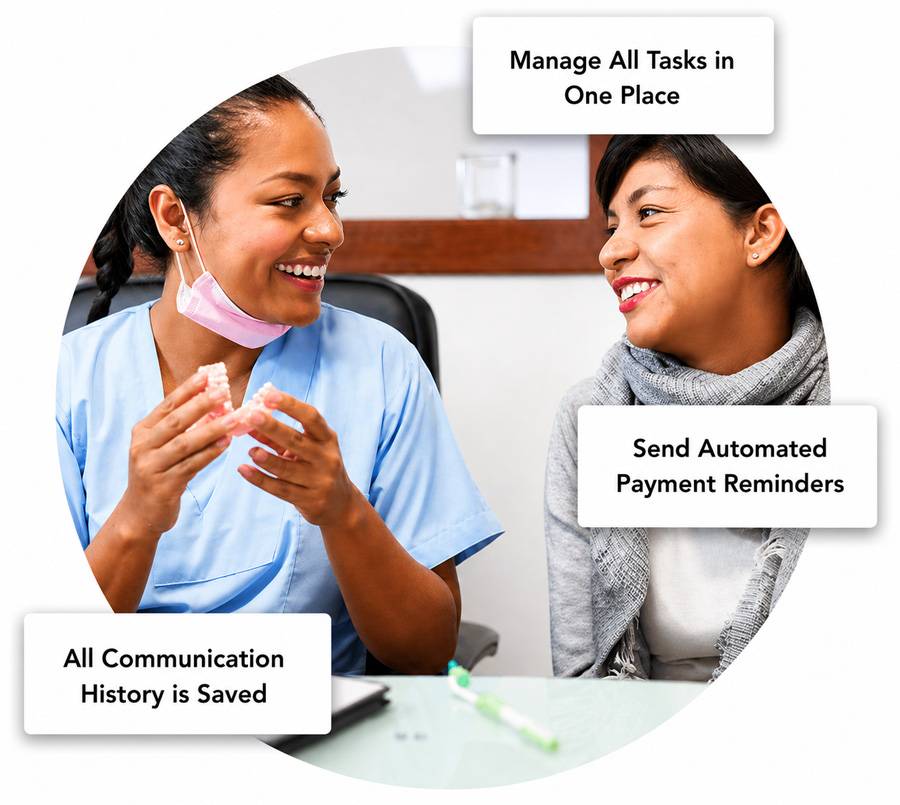
Oryx centralizes patient communication — appointment confirmations, recall reminders, payment follow-ups, and full communication history — so every location delivers the same standard of outreach without extra administrative lift.
Clinical documentation standards matter more than most practice owners expect until they try to bring in an associate or acquire another practice. Inconsistent charts make onboarding new providers slower, audits harder, and insurance appeals messier. Standardized templates and documentation protocols are worth building before you need them.
How to Actually Retain Patients as You Grow
Patient retention is where most growth plans fall apart. Attracting new patients is measurable and marketable; retaining existing ones is quieter and often gets deprioritized as a result.
The research on patient attrition in dental practices consistently points to the same root causes: feeling rushed, not understanding their treatment plan, and gaps in communication between visits. None of these require expensive fixes.
Scheduling enough time for new patient appointments — not just the clinical portion but the relationship-building portion — pays back in retention. Patients who feel understood by a practice are far more likely to refer others and far less likely to price-shop.
Treatment plan presentation matters more than most practices realize. When patients receive a treatment plan as a list of codes and dollar amounts, acceptance drops. When they receive a narrative — here’s what we found, here’s why it matters, here’s what happens if we wait — acceptance increases substantially. This is trainable for both dentists and treatment coordinators.
Between-visit communication is the most underutilized retention tool in dentistry. A brief touchpoint after a significant procedure, something that acknowledges the specific treatment rather than a generic survey, reinforces that your practice is paying attention. Reviews are most effectively solicited in this window, when the patient’s experience is fresh.
Marketing That Actually Works
The most effective marketing channel for most dental practices isn’t social media or direct mail. It’s Google — specifically Google Maps and organic search — because that’s where patients with immediate intent are looking.
Your Google Business Profile is the highest-ROI marketing asset most practices underutilize. Practices with more than 50 recent reviews and consistent photo updates rank meaningfully higher in local map results than those with 10 reviews and a profile that hasn’t been touched in years. Asking for reviews isn’t awkward when it’s framed as feedback, and it works best right after a positive appointment.
Paid search is worth considering for high-value procedures in competitive markets. The math shifts depending on your conversion rate from click to appointment to accepted treatment, but practices targeting implants, full-arch rehabilitation, or cosmetic work can generate strong returns when the landing page and follow-up process are solid.
SEO compounds over time in a way paid ads don’t. Content that answers specific patient questions — not just practice marketing copy — builds search visibility that pays off for years. A page that genuinely answers “when do I need a dental implant vs. a bridge” will attract patients at the decision stage far more effectively than a page that lists your hours and describes your waiting room.
Referral programs work, but they work best when they’re frictionless. A patient who wants to refer someone shouldn’t have to remember a code or fill out a form. The most successful referral programs make it easy to do one thing: send a link or hand over a card.
Multi-Location Growth: What Changes and What Doesn't
Running two or more locations introduces coordination costs that simply don’t exist at a single location. Most practices that struggle with multi-location growth aren’t struggling because the market isn’t there — they’re struggling because infrastructure that worked for one location doesn’t scale.
The pressure points tend to be the same across practices.
Centralized visibility into performance across locations is essential and often missing. If you’re managing multiple locations without a unified dashboard, you’re making decisions based on lagging data — last month’s collections report, a conversation with an office manager, a gut feeling. Real-time production and schedule data across all locations changes the quality of decisions you can make.
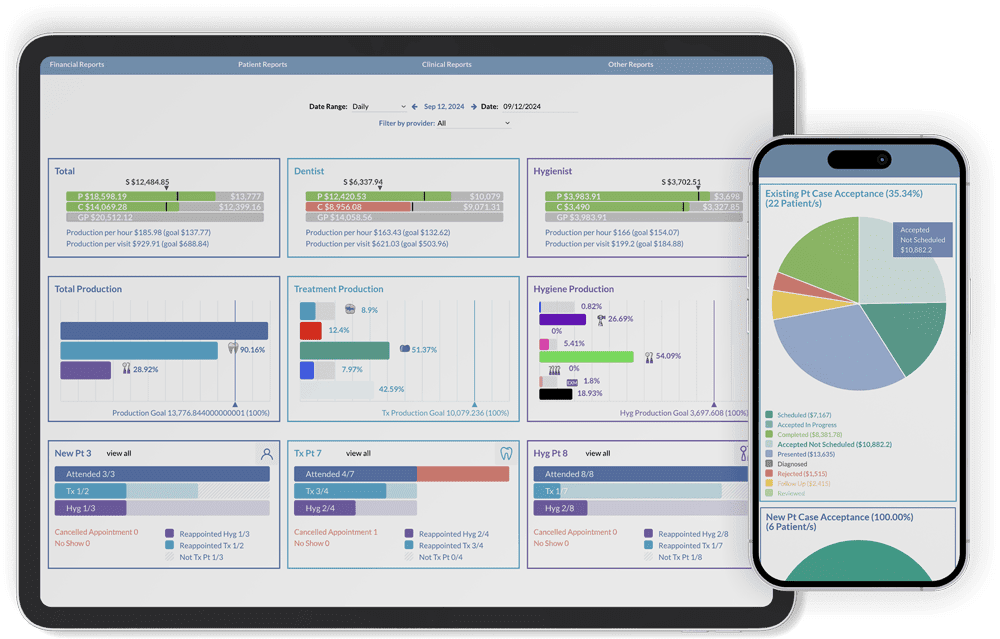
Oryx’s reporting dashboard gives group practice owners real-time visibility into production, hygiene performance, and case acceptance across every location — so decisions are based on live data, not last month’s collections report.
Staff management becomes a coordination challenge, not just a hiring challenge. Scheduling across locations, managing coverage, and ensuring consistent training all require more formal HR processes than single-location practices typically have. This is often what limits growth most painfully.
Software that doesn’t centralize data is a serious problem at scale. Patient records that live in location-specific systems make it impossible to serve patients across locations, run consolidated reporting, or manage billing centrally. Cloud-based practice management software solves this structurally — all records, all locations, accessible from anywhere with a login.
Culture consistency is the hardest thing to maintain. The patient experience at location three shouldn’t feel meaningfully different from location one. That’s primarily a hiring and training challenge, but it’s reinforced by operational standards: how calls are answered, how treatment plans are presented, how follow-up happens after appointments.
When to Acquire vs. When to Grow Organically
This is one of the most common questions in dental practice growth, and the honest answer is that it depends on factors most practices can actually calculate.
Organic growth makes more sense when your current locations have capacity you’re not using. If your hygiene schedule is running at 70% and your provider schedule has open slots, you have room to grow without adding overhead. Adding a location before optimizing existing ones is a common and expensive mistake.
Acquisition makes more sense when you’ve maximized utilization at existing locations, have the operational infrastructure to absorb a new practice, have access to favorable financing, and have found a practice where the patient base is stable and the seller is motivated for reasons that aren’t distress. Distressed acquisitions — practices with declining revenue, high turnover, or significant deferred maintenance — require a level of turnaround expertise that most growing groups don’t have.
One calculation worth running before any acquisition: what would it cost to build the same patient base organically? If the acquisition price represents less than two to three years of what it would cost to develop equivalent production yourself — accounting for marketing, hiring, and ramp-up time — the acquisition math often works. If it’s higher, organic growth may be more efficient unless there are strategic reasons, geography, competitive dynamics, that change the arithmetic.
The Technology Question
Practice management software isn’t the most exciting topic in dental practice growth, but it has more downstream consequences for everything else on this list than most owners expect.
Practices running server-based software face a structural limitation as they scale. Data doesn’t consolidate automatically across locations, remote access is cumbersome, and the IT burden grows with each location you add. Cloud-based systems centralize records, treatment plans, billing, and reporting in a way that makes multi-location management substantially easier to run.
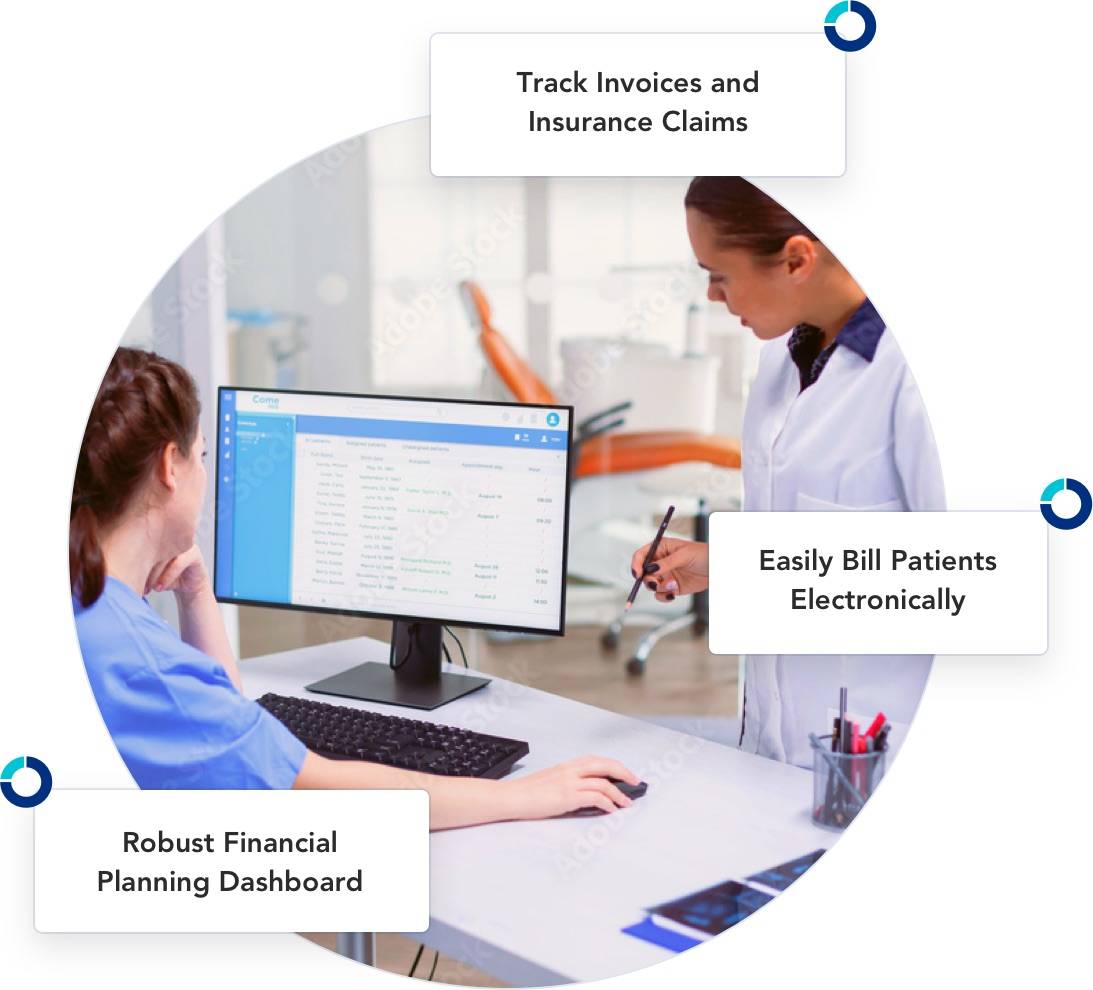
Oryx handles insurance claims tracking, electronic patient billing, and financial reporting in one cloud-based platform — the kind of centralized infrastructure that makes scaling beyond a single location operationally manageable.
When you’re evaluating software for a growing practice, the questions that matter most are: Can you see consolidated reporting across all locations in one place? Can you enforce standardized scheduling templates practice-wide? Can billing be handled centrally? Do patient communication workflows work consistently regardless of which location a patient visits? Cybersecurity is also a real consideration — cloud environments are meaningfully stronger than on-premise server setups, and dental practices are increasingly targeted.
The most important question, though, isn’t whether the software works for where you are now. It’s whether it works for where you’ll be in three years. Migrating practice management software mid-growth is expensive and disruptive. Getting the choice right upfront costs a lot less than getting it wrong.
The Short Version
Growing a dental practice sustainably comes down to a few fundamentals that don’t change regardless of where you are in the process: know your numbers, fix your retention before you invest heavily in acquisition, build operational infrastructure before you need it, and expand in ways your team can actually execute consistently.
The practices that scale best tend to be the ones that take the boring stuff seriously — documentation standards, scheduling templates, billing workflows — because those are the things that break expensively when they’re handled inconsistently across locations.
Growth is not primarily a marketing problem. It’s an operations problem that marketing can either accelerate or expose.